Sunspi Join the waitlist

Demo coming soon

Every inch.
Every side.

Step in. Sunspi's technology covers every inch from the neck down, front and back, not just what's easy to reach.

An even coat of reef-safe sunscreen. In seconds. For a few dollars.

Sunspi covers from the neck down. Apply your own face and scalp sunscreen separately.

Get the highlights.

The problem

Skin cancer is the most common cancer in America.1

More people in the U.S. are diagnosed with skin cancer each year than with all other cancers combined.1 Every one of them is a person who heard the word in an exam room and went home to tell someone they love.

9,500+

people in the U.S. are diagnosed with skin cancer. Every day.2

That's more than six every minute. Someone's mother. Someone's teammate. Someone who thought it was just a freckle.

8,510

Americans are expected to die of melanoma in 2026.3

About 23 people a day. Close to one every hour, all year long.

It almost never starts with anything dramatic. A burn across the shoulders after a long day on the water. A strip of back you couldn't reach. A sting on the backs of your legs you shrug off by dinner.

Then another summer. Another burn. On average, a person's risk of melanoma doubles after more than five sunburns.4 None of them felt like the one that mattered.

1 in 5

Americans will develop skin cancer by age 70.5

112,000

new invasive melanoma cases expected in the U.S. in 2026.3

+46.6%

rise in new invasive melanoma cases diagnosed each year, 2016–2026.1

Where it's found changes everything.

99%+

five-year survival when melanoma is caught early.6

35%

once it has spread to distant organs.6

Catching it early saves lives. Never getting the burn is better still.

~86%

of melanomas were attributed to UV radiation from the sun in one UK study.7

Here's the hopeful part.
Sunscreen works.

In a landmark randomized trial, regular daily use of SPF 15+ sunscreen, used as directed, cut melanoma risk by 50%.8 The protection already exists. The problem is getting enough of it, everywhere, every time.

That's what Sunspi is for: an even coat of reef-safe sunscreen from the neck down, in seconds, for a few dollars.

The 50% figure is general sunscreen research, not a Sunspi clinical result. Sunspi is not a medical treatment.

Why sunscreen falls short

Sunscreen works.
The way we apply it doesn't.

Nobody gets this wrong on purpose. Bottles, sprays and two hands just weren't built for the job. Here is what the research shows.

  1. 01 Too little
  2. 02 Missed spots
  3. 03 Rarely reapplied
  4. 04 Sprays drift
  5. 05 Messy and slow
  6. 06 Costly as directed
  7. 07 Hard on reefs

01

Too little.

SPF numbers are measured at 2 mg of sunscreen per square centimeter of skin. For an adult body that's about 1 ounce, roughly a shot glass.9 In real life, people put on far less: about 0.39 to 1.0 mg/cm² under natural conditions.10

25–50%

of the recommended amount is all most people apply.9

02

Missed spots.

Sunscreen only works where it lands. Hands miss the places they can't easily reach or see: the back, the shoulders, the backs of the legs, the feet.

Back view of a body showing commonly missed sunscreen areas below the neck By hand, the shoulders, mid-back, backs of the legs and feet are often missed. With Sunspi, everything from the neck down gets an even coat. The head is not covered by Sunspi: face and scalp sunscreen is applied separately by the person.
Commonly missed Covered Face & scalp: your own step Illustration. Missed areas based on published application studies.11,12 Sunspi covers from the neck down.

31%

of target skin showed no sunscreen after a single cream application in a fluorescence study. The central back, legs and feet, especially the soles, were often missed.11

71.5%

of the back was covered when people applied sunscreen to it by hand. The middle back got the least.12

27%

of Americans know the recommended minimum amount: at least 2 tablespoons.13

0

Median coverage on the back of the neck and the ears in one study of hand application. Those are part of your own face-and-head step, so give them a second look.14

03 Rarely reapplied

The best sunscreen is
the one you actually wear.

We forget it. We skip it on cloudy days. And once it's on, most of us never put on more.

38%

of sunscreen users typically reapply every two hours.13

28%

tend not to reapply at all.13

53%

say they often forget to apply sunscreen.13

21%

use sunscreen regularly on cloudy days. 57% do overall.13

Only 12.3% of men and 29.0% of women said they always used sunscreen when outside on a sunny day for more than an hour.15

And the rest of the list.

Sand streaming across a beach in strong wind.

04

Sprays drift.

Wind carries the mist away, and a clear, fast-drying spray makes it hard to tell what you've covered. Dermatologists say to skip spraying on windy days, spray until skin glistens, then rub it in anyway.16

One report in the Journal of the American Academy of Dermatology described blotchy protection: skin inside the mist was spared while the skin around it burned.17

Two feet coated in beach sand.

05

Messy and slow.

Greasy hands. Sand that sticks. Someone waiting at the water's edge while you wrestle with your back. When applying sunscreen is a chore, it gets rushed or skipped, and a rushed coat is a thin coat.

Families with umbrellas and towels on a crowded beach.

06

Costly, used as directed.

Used the way it's tested, sunscreen goes fast. A typical 6-ounce spray bottle holds just six applications.18

A 2011 analysis estimated that a family of four at the beach applying the recommended amount would spend a median of $178–$238 a week on sunscreen, at 2011 prices.19

A bleached white coral colony.

07

Hard on reefs.

Oxybenzone and octinoxate are still permitted in U.S. sunscreens. NOAA lists both among the chemical UV filters that can harm marine life, including corals.20

Hawaii has banned their sale without a prescription since January 1, 2021.21 Palau banned reef-toxic sunscreens from 2020.22 Key West passed a similar ordinance in 2019, but Florida preempted it, so it never took effect.23

Enter Sunspi

So we fixed the application.

Keep the sunscreen. Lose the guesswork. Here is how Sunspi answers each fault.

  • 01 Too little

    A full, even coat. No guessing how much.

  • 02 Missed spots

    Every inch from the neck down, including the back, shoulders, backs of the legs and feet.

  • 03 Rarely reapplied

    Seconds, right where you play. Reapplying is just stepping back in.

  • 04 Sprays drift

    Applied inside the booth. Nothing drifting away on the wind.

  • 05 Messy and slow

    No sticky hands. No asking someone to do your back.

  • 06 Costly

    A few dollars. No bottle to buy, carry or forget.

  • 07 Hard on reefs

    Only reef-safe sunscreen. No oxybenzone. No octinoxate.

Face and scalp stay your step. Sunspi covers from the neck down. Apply your own sunscreen to your face, ears and scalp separately.

How it works

Step in. Step out.
Covered.

Three steps. A few seconds. No sticky hands.

  1. Step in.

    Walk into the Sunspi booth. Honestly, that's the hardest part.

  2. Get covered.

    In seconds, Sunspi's technology lays down an even coat of reef-safe sunscreen from the neck down. Front, back, shoulders, legs, feet.

  3. Step out.

    Back to the water, the court, the trail. Protected, for a few dollars.

A surfer carrying a board along a sunlit beach.

Every inch from the neck down

Not just what's
easy to reach.

Families on a sunny beach beside calm water.

Speed

Seconds.

Faster than finding someone to do your back.

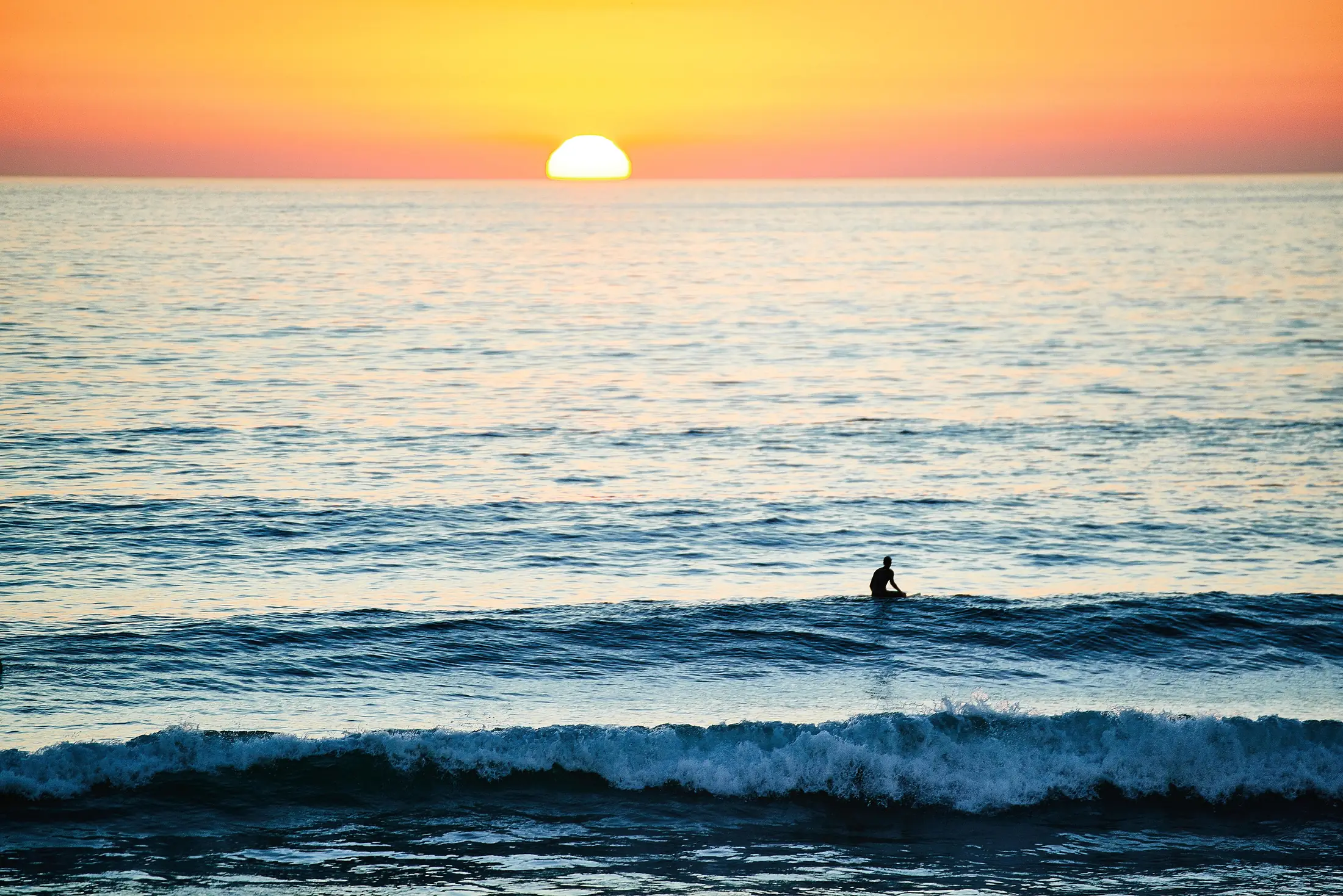
A surfer on a wave at sunset.

Even coverage

One even coat.

Neck to feet. No streaks, no thin patches, no guessing how much.

A beachgoer seen from behind, bare shoulders and back in full sun.

Missed spots

Goodbye, sunburned back.

Shoulders, mid-back, backs of the legs, feet. Handled.

Sea fans and reef fish on a healthy coral reef.

Reef-safe

Only reef-safe sunscreen.

Every coat. Every booth. No exceptions.

Athletes playing beach volleyball by the sea.

Care

Skin health, built in.

Designed with premedical and medical students who know what the sun does to skin.

A runner heading down a tropical beach.

Made for where you play

A few dollars.
Neck down, covered.

The ocean

Protect your skin.
Not at the reef's expense.

Float face-down over a living reef and the world goes loud with color. Fish flicker through branching coral. Everything moves, eats, hides, grows.

A bleached reef is the same place gone white as bone. Quiet. Coral is alive, and when it bleaches, it is starving. Sunscreen is not the only thing hurting reefs. But it is something we carry into the water ourselves, every day, by choice.

What NOAA says some sunscreen chemicals can do to coral:20

  • Build up in its tissue.
  • Trigger bleaching.
  • Damage its DNA.
  • Deform its young.
  • Kill it.

Oxybenzone and octinoxate are among the chemicals NOAA lists as able to harm marine life. A 2022 National Academies review found that specific chemical UV filters can harm aquatic life, including corals. This is an active area of research.20

What's washing off.

Every swim rinses some of what we're wearing into the sea. NOAA describes mineral sunscreen as a better option for the water, with fewer effects on aquatic organisms.20

  • Oxybenzone
  • Octinoxate

Places are taking a stand.

  1. 2019

    Key West passed an ordinance banning sales of sunscreens with oxybenzone or octinoxate. Florida then preempted local rules in 2020, so it never took effect.23

  2. 2020

    Palau banned the sale and import of "reef-toxic" sunscreens, including those with oxybenzone and octinoxate.22

  3. 2021

    Hawaii made it unlawful to sell sunscreen containing oxybenzone or octinoxate without a prescription. Still in force.21

Every Sunspi booth.
Reef-safe only.

Your protection shouldn't cost the ocean anything. With Sunspi, you get an even coat from the neck down, in seconds, for a few dollars, and the only thing that goes in the water with you is reef-safe sunscreen.
One step
solves all of it.

Four problems. One booth. Plus your own face and scalp sunscreen.

Melanoma risk

Make sun protection a quick, everyday habit.

Missed spots, thin coats

Even coverage from the neck down. Every inch. Every side.

Infrequent use

Seconds, a few dollars, right where you play.

Reef damage

Reef-safe sunscreen only.

Sunspi applies sunscreen from the neck down. It is not a medical treatment and is not a substitute for skin checks with a dermatologist.

The team

Engineers and future doctors.
On the same mission.

Sunspi is built by people who understand machines and people who understand skin.

A curved white campus building under blue sky at Embry-Riddle Aeronautical University, Daytona Beach.

Daytona Beach, Florida

Embry-Riddle engineers

Designing the booth and the technology that lays down one even coat from the neck down, in seconds.

The cast-iron Arch at the edge of the University of Georgia campus in Athens.

Athens, Georgia

UGA premedical and medical students

Bringing the skin-health perspective: why coverage matters, and why melanoma prevention starts with habits.

Our mission

A Sunspi everywhere
the sun is.

Wherever there's a risk of skin damage, we want a Sunspi there. Affordable for everyone, for a few dollars.

  • Beaches
  • Pools
  • Parks
  • Stadiums
  • Resorts
  • Race events
  • And beyond

Saving people and the environment.
One even coat at a time.

Demo coming soon

Be first in line.

Join the waitlist and hear when the Sunspi demo is ready.

No spam, ever.

Questions.

What is Sunspi?

A booth you step into that gives you an even coat of reef-safe sunscreen from the neck down in seconds, for a few dollars. Every inch from the neck down, not just what's easy to reach.

Does Sunspi cover my face and scalp?

No. Sunspi covers from the neck down. Apply your own sunscreen to your face, ears and scalp separately, before or after you step in.

How long does it take?

Seconds. Step in, get covered, step out.

What sunscreen does Sunspi use?

Only reef-safe sunscreen. No oxybenzone and no octinoxate, the two ingredients banned from sale in Hawaii. We'll share full formulation details with the demo.

How much will it cost?

A few dollars per session. Final pricing comes closer to launch.

When and where can I try it?

The demo is coming soon. Join the waitlist and we'll let you know.

Do I still need to reapply?

Yes. Follow the sunscreen label. Dermatologists recommend reapplying about every two hours, and after swimming or sweating.9 With Sunspi, reapplying from the neck down takes seconds. Remember to reapply on your face and scalp too.

Is Sunspi a medical treatment?

No. Sunspi applies sunscreen. It does not diagnose, treat or cure anything, and it's not a substitute for regular skin checks. The melanoma and sunscreen figures on this page come from general published research, not from studies of Sunspi.

Who's building Sunspi?

A team of Embry-Riddle engineers and UGA premedical and medical students.